

The Fries the Limit: Potatoes Without Borders


A Global Journey Through the Art of the French Fry
Crispy, golden, and pretty much universally beloved, the humble french fry has conquered the world. But what started as a simple fried potato has evolved into countless regional variations, each with its own character, preparation method, and cultural significance. Countries around the world have often developed a unique approach to this pure comfort food magic.
Everyone has their favorite but if your favorite is MacDonalds then you might as well stop reading here. Ok, just kidding, but anyone who has read any of my other food related travel posts knows that I am not a fan of fast food nor do I frequent chain restaurants but that's just me. Regarding fries? I am personally torn between the Belgian Frites and the Chips in England but I'd give England the edge because I love Malt Vinegar!
Origins
The Great Fry Debate
The origin of the french fry is one of the most hotly contested disputes in culinary history. Belgium and France both claim to have invented this beloved dish, and the truth may never be fully settled. According to Belgian lore, villagers in the Meuse Valley near Namur began frying potato strips in the late 1600s as a substitute for small fish when the river froze over in winter. However, historians question this story since potatoes weren't widely available in the region until the 1730s, and peasants would have been unlikely to waste expensive oil on frying.
The French counter that fried potatoes were sold by street vendors on Paris's Pont Neuf bridge in the late 1780s, becoming an emblematic Parisian dish in the 19th century. Belgian food historian Pierre Leclercq even discovered that a German cook trained in Paris, Herr Krieger, traveled through Belgium in the 1840s selling what he called "Paris-style fried potatoes." Regardless of their true birthplace, the double-frying technique that makes fries crispy outside and fluffy inside is distinctly Belgian, and Belgium consumes more fries per capita than any other nation—they even have a museum dedicated to them in Bruges.
Regardless of origin the many variations around the world are a go to side, or even meal, for millions. Even if you hate to love them (carbs are sooooo delicious, yes?) they are a great way to enjoy your worldly travels. So, join me as we explore the wonderful world of the fried potato- plus a few outliers for good measure.
1. Poutine – Québec, Canada

The Cut: Thick-cut, crispy fries that can stand up to a heavy topping.
The Magic: Born in rural Québec in the 1950s, poutine is Canada's gift to late-night cravings everywhere. Fresh cheese curds (they must squeak!) are piled onto hot fries, then smothered in rich brown gravy. The result? A glorious mess where the curds melt just enough while maintaining their texture, and the gravy soaks into the fries creating pockets of savory heaven.
I've had a few different types across the country but the best I ever had was naturally in Québec's metropolitan city Montréal. You can find several modern variations: pulled pork, Montréal smoked meat, bacon (sometimes with maple syrup), donair poutine, or even foie gras! Purists like myself, though, insist on the holy trinity: fries, curds, gravy.
2. Chips with Malt Vinegar – England

The Cut: Chunky, substantial chips with a fluffy interior and crispy exterior.
The Magic: In Britain, they're not fries, they're chips, and they're meant to be doused in malt vinegar and sprinkled with salt. Often wrapped in paper, these thick-cut beauties are the perfect companion to battered fish. The acidity of the vinegar cuts through the richness of the fried potato, creating a tangy, salty combination that's been a staple since the Victorian era. Some shops offer curry sauce or mushy peas on the side, but the vinegar-soaked chip (and I mean SOAKED!), steaming and slightly soggy in all the right ways, is an institution unto itself.
3. Belgian Frites – Belgium

The Cut: Thick-cut and double-fried in beef tallow or vegetable oil.
The Magic: Belgium takes its fries seriously. Forget France claiming the invention; Belgians will tell you they've been perfecting the art since the 1600s. The secret? Double-frying. First at a lower temperature to cook through, then at high heat for that legendary crispy exterior and fluffy center. Served in a paper cone with your choice of sauce (and there are dozens), Belgian frites are often enjoyed with mayonnaise, andalouse (mayo with tomato and peppers), or the decadent sauce americaine (mayo with tomato, onion, and spices).
Friteries are everywhere, and locals take pride in their favorite spot. Now, I've not actually had them in Belgium proper but I did find a lovely frietkot (Dutch for friterie) in Amsterdam near the Christmas market and skating rink by the Rijksmuseum and they were prepared the exact same way as in Belgium and, indeed, they were exceptional. If you are anywhere in the New York metro area you can actually find a pretty decent version at Pommes Frites which, when I was last there, was in the East Village but has since moved. As for the sauce? My go to for these types of fries is always mayonnaise.
4. Shoestring Fries – USA and Canada

The Cut: Ultra-thin, delicate, and impossibly crispy.
The Magic: These paper-thin fries are all about texture. Cut to barely thicker than a matchstick, shoestring fries shatter with each bite, offering maximum surface area for crisping. They're often piled high in diners and steakhouses across North America, sometimes dusted with garlic salt or parmesan. Because they're so thin, they absorb less oil and deliver pure crunch. They're perfect for dipping in everything from ketchup to aioli, though many argue they're best enjoyed plain and salted, letting that potato flavor and crispy texture shine through.
5. Patatas Bravas – Spain

The Cut: Irregular chunks, sometimes fried, sometimes roasted.
The Magic: A tapas bar favorite, patatas bravas are Spain's answer to the loaded fry. Cut into rustic cubes and fried until crispy, they're served swimming in brava sauce, a spicy tomato-based concoction that varies by region and chef. These are my absolute go to in a tapas joint and I highly recommend pairing it with the chorizo! Some versions add aioli or alioli on top, creating a creamy contrast to the heat. The potatoes themselves are often less crispy than their northern European cousins, with a softer bite that soaks up the sauce. Each bite is a combination of spicy, garlicky, and potato-y goodness, best enjoyed with a cold cerveza and good conversation because, admit it, patatas bravas is fun to say!
6. Disco Fries – New Jersey, USA

The Cut: Standard crinkle-cut or straight-cut diner fries.
The Magic: Born in the diners of New Jersey as a late-night staple for club-goers (hence "disco"), these fries are smothered in brown gravy and melted mozzarella cheese. Think of them as poutine's American cousin, swapping cheese curds for gooey mozzarella. The result is gloriously messy, satisfying, and perfect for soaking up a night out. The gravy is typically a rich brown beef gravy, and the whole thing arrives sizzling hot. Best eaten with a fork, though dedicated fans aren't above using their hands for the crispy edges that escape the gravy.
7. Chips and Curry Sauce – Ireland

The Cut: Chunky chips, similar to British style but with their own Irish character.
The Magic: In Ireland, the chipper (chip shop) is a sacred institution, and chips with curry sauce is the order of choice. But don't expect authentic Indian curry; this is a mild, slightly sweet, bright yellow sauce that's uniquely Irish. It coats the chips in a comforting, warming glaze that's perfect after a night at the pub or a rainy afternoon. When I first tried it I was a bit hesitant but it was awesome and was a great end to my pub crawl through Temple Bar in Dublin. Some regions prefer their curry sauce thick and almost gravy-like, while others keep it thinner. Either way, it's become such a part of Irish culture that returning emigrants often cite chips and curry sauce as one of their most-missed comfort foods.
8. Polenta Fries – Italy

The Cut: Thick sticks of fried polenta, golden and crispy outside, creamy inside.
The Magic: While not potato-based, polenta fries deserve a spot on this list for their ingenious take on the fried stick concept. Cooked polenta is spread into a pan, chilled until firm, then cut into batons and fried until crispy. The result is a creamy, corn-flavored interior with a crunchy golden crust. Often served as an appetizer or street food in northern Italy, they're sometimes dusted with parmesan or served with marinara sauce. They have a richer, more complex flavor than potato fries, with a tender texture that melts on the tongue. I probably ate dozens of them along with some amazing Arancini during my time in Venice. Paired, of course, with a red Valpolicella wine.
9. Tornado Potato – South Korea

The Cut: A whole potato spiral-cut into one continuous curly fry on a stick.
The Magic: Part art, part snack, the tornado potato is a spectacular street food creation. A whole potato is threaded onto a skewer and spiral-cut with a special machine, then stretched out and deep-fried until crispy. The result looks like a golden spring or tornado wrapping around the stick. It's then seasoned with flavors ranging from cheese powder to BBQ spice, honey butter, or even seaweed. The genius is in the surface area; every bite is crispy, and the seasonings coat every ridge and crevice. It's Instagram-worthy, delicious, and fun to eat.
10. Seaweed Fries – Japan
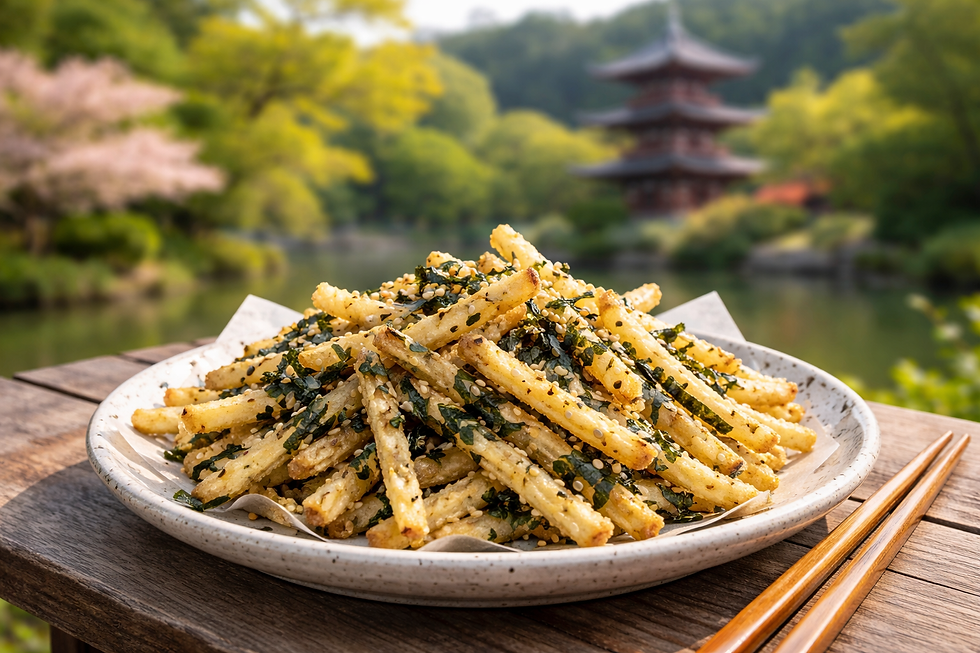
The Cut: Thin to medium-cut fries, perfectly crispy.
The Magic: Japan has embraced the french fry with characteristic creativity. One popular variation involves tossing hot fries with nori (seaweed) flakes and a touch of soy sauce or special seasoning. The umami-rich seaweed adds a savory, slightly oceanic flavor that complements the potato beautifully. Some versions include sesame seeds or a dusting of shichimi togarashi (seven-spice blend) for heat. Fast-food chains and izakayas alike offer this variation, which has become so popular that seaweed-flavored fry seasonings are sold in grocery stores for home cooks to recreate the magic.
Honorable Mention: Kumpir – Türkiye

The Preparation: Whole baked potatoes, mashed and loaded with toppings.
The Magic: While not a fry in the traditional sense, kumpir deserves recognition as quite possibly the best baked potato street food in the world. Found at street carts throughout Türkiye, especially along Istanbul's Ortaköy waterfront (which is where I first tried one), kumpir starts with a massive baked potato.
The vendor splits it open, mashes the fluffy interior with butter and cheese until it becomes creamy and rich, then offers you a dizzying array of toppings to pile on top. We're talking pickles, corn, peas, olives, spicy Sucuk sausage (yes!), Russian salad, pickled cabbage, carrots, and sometimes even potato chips for extra crunch. The result is an overstuffed, gloriously messy meal-in-a-potato that combines hot and cold, creamy and crunchy, savory and tangy all in one handheld package.
It's street food excess at its finest, and absolutely worth the mess. No matter how many times I have tried to replicate kumpir at home I simply cannot get the technique down . The vendors just have a certain knack for the art, and yes, it is an art form when done properly!
Honorable Mention: Pommes Aligot – France

The Cut: Again, not fries at all, but mashed potatoes elevated to an art form.
The Magic: Okay, so this also one breaks the rules since it's not technically a fry, but it's too delicious to ignore. Hailing from the Aubrac region of France, aligot is mashed potatoes beaten with butter, cream, garlic, and fresh tomme cheese until it reaches an impossibly stretchy, elastic consistency. When served, it's lifted high with wooden spoons, creating dramatic cheese-potato ribbons. The texture is silky, the flavor is rich and garlicky, and it's traditionally paired with sausages. While not a fry, it represents the French devotion to doing potatoes justice, proving there's more than one way to achieve potato perfection.
Honorable Mention: Waffle Fries – USA & Canada

The Cut: Lattice-cut fries with a distinctive crisscross waffle pattern.
The Magic: Often a child's favorite (to be honest, plenty of adults love them too), waffle fries are the fun, playful member of the fry family. Cut with a special crinkle blade at alternating angles, they create a grid pattern that's not just adorable but functionally genius. The lattice design provides maximum surface area for crisping while the thicker body stays fluffy inside.
Those little pockets and ridges are perfect for catching ketchup, ranch, or cheese sauce, making every bite a perfectly seasoned experience. Popularized by fast-food chains (which is why it is a mention and not in the main list), waffle fries have become synonymous with kid-friendly meals, though their superior dipping capabilities and satisfying crunch make them a cross-generational favorite. They're proof that sometimes, the most whimsical option is also the most delicious. In my personal opinion they are little more than a vessel to maximize ketchup intake to the little ones.
Honorable Mention: Animal Style Fries – California, USA
The Cut: Thin, crispy fries from In-N-Out Burger's signature style.
The Magic: Another fast food entry for the honorable mention is the West Coast burger chain In-N-Out that has a not-so-secret secret menu, and Animal Style Fries are the crown jewel. Regular fries are topped with melted American cheese, grilled onions, and their signature spread (a tangy, Thousand Island-style sauce). The combination is indulgent and addictive. The spread adds creaminess and tang, the grilled onions provide sweetness and depth, and the melted cheese ties it all together. They arrive as a glorious, messy pile that requires a fork and total commitment. Californians consider them a rite of passage, whereas I consider them a cardiac arrest!
The Universal Language of Fried Potatoes

The next time someone tells you they don't like french fries, they're lying. Or they haven't tried the right ones yet.
What started as peasants making do with frozen rivers and/or Parisian street vendors hawking snacks has become something bigger than any of its origin stories. The french fry doesn't care about borders, language, or culinary traditions. It just wants to be crispy on the outside, fluffy on the inside, and properly salted.
And here's the thing: every place that's adopted the fry has made it better, or perhaps better is quite the right word rather they have made them just different enough to be uniquely delish. The Belgians perfected the double-fry. The Quebecois had the audacity to drown them in gravy and cheese curds. The Koreans put them on a stick and turned them into art. The Irish invented a curry sauce that has nothing to do with curry and everything to do with comfort. There's no "authentic" way to create or enjoy french fries. There's many ways, shaped by where you grew up, or where you find yourself visiting or maybe just by what was open late at night, and even sometimes who you were with when you ate them. That's what makes them perfect.
So go ahead. Order them however you want. Dip them in whatever makes you happy. Eat them with your hands or a fork or straight from the paper cone while standing on a street corner at midnight. The fries aren't judging you. They're too busy being delicious.
Bon appétit, or as they say in Belgium, smakelijk!


Comments